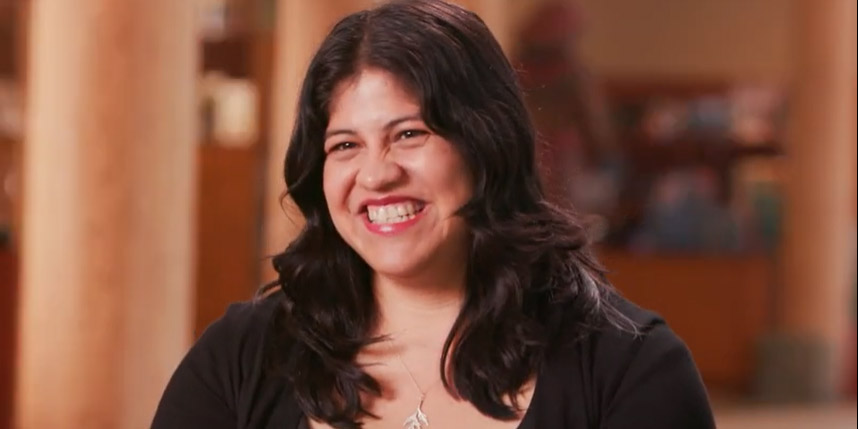


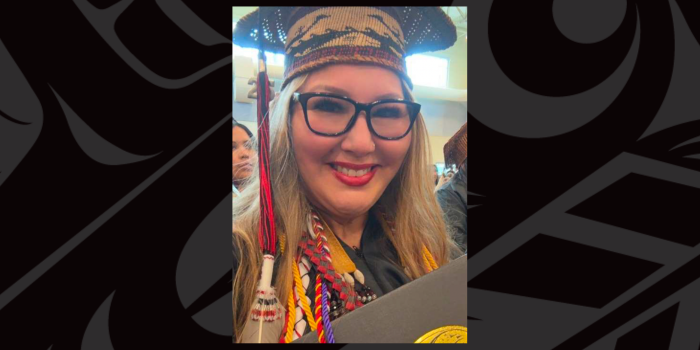
Christina Hoekstra describes herself as a mother, grandmother, widow, student, counselor, person in long-term recovery and first-generation college student. She is also a #-time recipient of the WIGA Scholarship, which has helped support her as she pursues her educational goals.
In a recent interview, we asked Christina about her personal journey, the role education plays in her life and what the WIGA Scholarship means to her.
Q: Please tell us a bit about yourself.
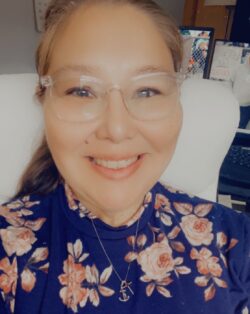 My name is siɁamíca, Christina Hoekstra, and I am an enrolled member of the Makah Tribe and a descendant of the Jamestown S’Klallam Tribe. I grew up in Neah Bay, Washington, on the Makah Reservation, and my family, culture, community, and experiences have shaped the person I am today. I am a mother, grandmother, widow, student, counselor, and person in long-term recovery. I am also a first-generation college student. Some of my greatest passions are helping others, working within Tribal communities, advocating for people who may not always have a voice, and showing others that healing and change are possible. My life has not always followed an easy or traditional path, but those experiences have given me a purpose that I carry into my education and the work I do today.
Q: What has your educational journey been like so far?
My educational journey is something I am extremely proud of because there was a time in my life when I never imagined I would be where I am today. I attend Northwest Indian College and have earned an Associate of Applied Science Direct Transfer degree, an Associate of Technical Arts in Chemical Dependency Studies, and an Associate of Technical Arts in Behavioral Health Aide. I am currently completing my Bachelor of Arts in Community Advocacy and Responsive Education (CARE) with an emphasis in Human Services.
I have continued working while attending school and have remained committed to completing my education even when life has been difficult. My next goal is to earn a Master of Social Work with a clinical focus. Eventually, I would also like to earn my doctorate. Education has become more than something I am doing for myself; it has become part of the legacy I want to leave for my family and community.
Q: You are working toward your BA in Community Advocacy Responsive Education (CARE) in Human Service. Can you tell us a bit about why you’ve chosen this field of study?
I chose Human Services because helping people has become one of the strongest purposes in my life. My lived experiences have shown me how important it is for people to have someone who sees them as a whole person rather than only seeing their struggles.
I am especially passionate about behavioral health, substance use disorder treatment, recovery, Indigenous healing, advocacy, and culturally responsive services. I believe our communities already carry tremendous knowledge about healing, connection, culture, family, land, water, and community. My education is helping me bring together lived experience, professional knowledge, and Indigenous ways of knowing so that I can better serve the people and communities I work with.
CARE also fits who I am because it is not simply about providing a service to someone. It is about advocacy, relationships, community, responsibility, and creating meaningful change.
Q: What are your career goals are once you earn your degree?
My immediate goal is to continue working in substance use disorder treatment/Behavioral Health while pursuing my Master of Social Work. I want to become a clinical social worker and continue working with Tribal communities, particularly in behavioral health, recovery, co-occurring disorders, and culturally grounded approaches to healing.
Long term, I want to be part of developing and leading programs that strengthen recovery services in Tribal communities. I am especially interested in creating culturally grounded recovery programs and services that recognize that healing is more than treating a diagnosis.
I also want to teach. Northwest Indian College has changed my life, and someday I would love to be able to stand in a classroom and help another student recognize possibilities in themselves that they may not yet be able to see.
Ultimately, I plan to continue my education through the doctoral level and use everything I learn to serve and give back.
Q: Why is higher education important to you?
Higher education is important to me because education changed what I believed was possible for my life. I have experienced healing though education as I began to see this is possible.
As a first-generation college student, earning a degree means much more to me than receiving a diploma. Education has given me confidence, knowledge, opportunities, and a stronger voice. It has taught me how to take experiences from my own life and turn them into something that can help other people.
Education is also important because my children and grandchildren are watching me. I want them to understand that there is no expiration date on changing your life or pursuing a dream. Your past does not determine how your story has to end.
Every degree I earn represents perseverance, healing, and another step toward being able to serve my community at a greater level.
Q: How has your heritage and culture has influenced your upbringing and your educational goals?
Being an enrolled Makah and growing up in Neah Bay has deeply influenced the way I understand community, relationships, responsibility, and healing. Even the hardships we experience can shape who we become. My great-grandmother was Jamestown S’Klallam, and when I was a little girl, she spoke to me in her language. Recently, I began learning and speaking her language again, and something happened that I did not expect, I felt the little girl inside of me heal. I felt connected to my great-grandmother and to who I am at my core.
Culture has taught me that wellness is not simply about the individual. We are connected to our families, communities, ancestors, land, water, and the generations that come after us. That understanding influences both my education and the kind of professional I want to become. I am particularly interested in Indigenous approaches to healing and recognizing the knowledge and ways of healing that already exist within our communities.
My education has also taught me the importance of cultural humility. Tribal communities are not all the same, and teachings and knowledge belong to the people and communities they come from. I want my professional work to honor those differences rather than assuming that one approach represents all Indigenous people.
My heritage reminds me that earning an education also comes with responsibility. I do not want to simply earn degrees and collect titles. I want to bring what I learn back into our communities and use my education in ways that contribute to healing, while continuing to learn from the knowledge that has always been here.
Q: What role has the WIGA scholarship played in your educational journey?
The WIGA scholarship has played a significant role in keeping me in college and allowing me to continue pursuing my education. I am a widow, and I am doing life on my own. I have one income, and at the end of the day, I am the person responsible for taking care of my family and making sure our needs are met. Trying to balance those responsibilities while working full-time and attending college is not always easy, and there have been times when the financial burden could have prevented me from continuing my education.
The WIGA scholarship has helped take some of that weight off my shoulders. It has helped with the expenses that come with being a student and has allowed me to remain focused on finishing my degree instead of having to choose between my education and taking care of my family. The truth is, I need the help, and WIGA has helped keep me in college.
Receiving this scholarship also means more to me than financial assistance. It reminds me that there are people and organizations who believe in Native students and are willing to invest in our futures. As a first-generation college student, a mother, a widow, and someone working hard to build a different future for my family, that support means more than I can fully express.
WIGA’s investment in my education does not stop with me. I intend to take everything I am learning and use it to serve our Tribal communities. I am incredibly grateful for WIGA’s continued support and for helping make it possible for me to keep going.
Q: Is there anything else you’d like to share?
If there is one thing I would like people to take from my story, it is that healing is possible.
There were times in my life when the future I have today would have been difficult for me to imagine. Today, I am in recovery, educated, continuing my education, and working in a field where I have the opportunity to help others. But one of the things I am most proud of is that this journey has not only been about me. My sons are now graduating from college too.
We are a family that is healing together through education. We are a family in recovery, continuing to move forward and thrive even through grief and the difficult things we have experienced. We have learned that healing does not mean that hard things stop happening or that we forget the people we have lost. It means we continue living, growing, loving, and building something different while carrying them with us.
Watching my sons earn their degrees while I continue earning mine means more to me than I can put into words. Education has become part of our family’s healing. We are changing what our story looks like and what we pass forward to the generations who come after us.
I am grateful for Northwest Indian College, for the people and communities who have supported my family and me, and for organizations such as WIGA that invest in Native students and believe in what we can accomplish. Their investment reaches further than one student or one degree—it reaches our families and future generations.
I am not finished, and neither is our family’s story. We are continuing to learn, continuing to heal, continuing to grow, and continuing to thrive.
Healing is possible. We are living proof.
Christina is available to share her story and visit your tribal community. Contact her to learn more.
 AWT’s Executive Director is Patrick DePoe, a Makah tribal member with deep experience in tribal and state government. He previously served on the executive team at the Washington State Department of Natural Resources and spent six years as an elected member of the Makah Tribal Council, where he led tribal coordination with state and federal agencies on climate resilience and habitat restoration.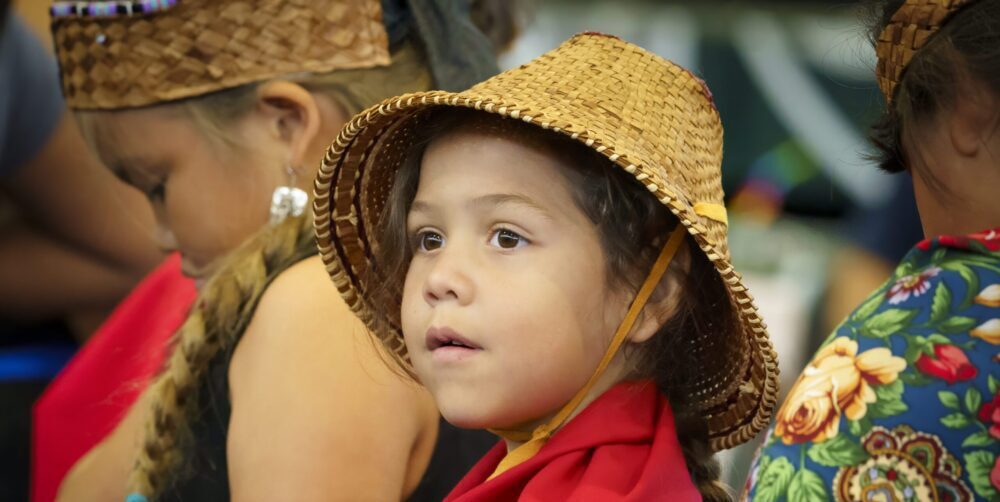

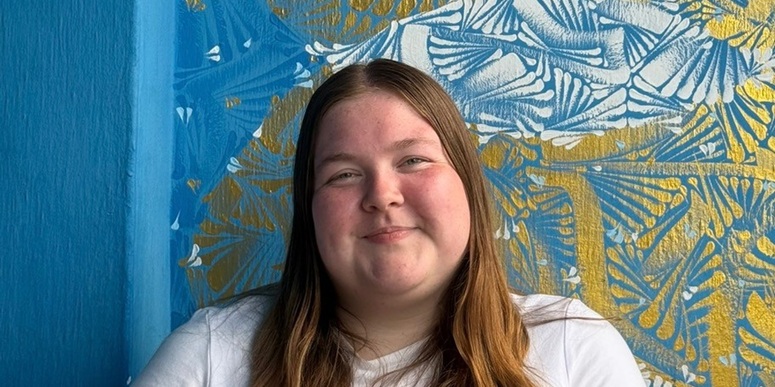
 Mackenzie Crow is a member of the Suquamish Tribe, a zoology student at Washington State University, and a two-time recipient of the Washington Indian Gaming Association (WIGA) scholarship. In a conversation earlier this month, we asked Mackenzie about the importance of education, her career goals and what it means to be a WIGA Scholarship recipient.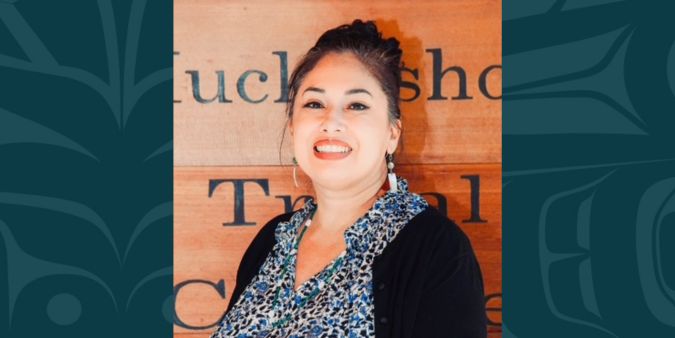
 WIGA Scholarship recipient Cheebo Frazier is Vice Chairwoman of the Nisqually Tribe, former Chief Human Resources Officer, Casino Manager and longest-serving GM for the Tribe’s Tribal gaming enterprise, and prior COO and CEO of the tribe’s corporate arm Medicine Creek Enterprise Corporation. She has a master’s degree in business administration and is pursuing her doctoral degree in education as an Indigenous Community Leader at the University of Washington/Muckleshoot Indian College. We recently asked Cheebo about her educational pursuits, career mission, and the role the WIGA scholarship has played in helping her achieve her goals.